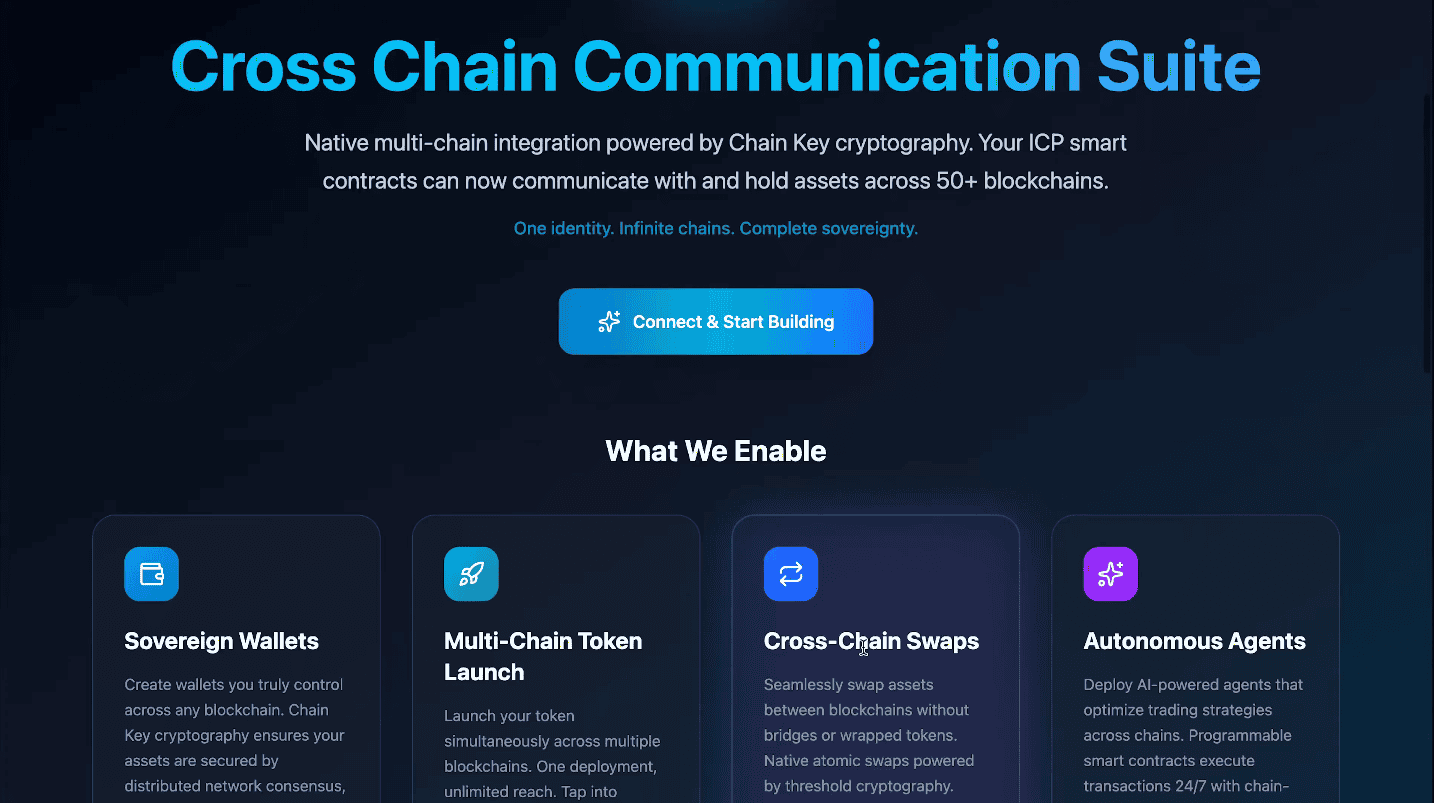
In a significant step forward for blockchain interoperability and real-world utility, Litecoin has achieved direct, protocol-level integration with the Internet Computer Protocol (ICP). Announced by ICP HUB Egypt on December 3, 2025, this development brings $LTC into ICP’s ecosystem not through vulnerable third-party bridges, but via native sovereign features powered by ICP’s advanced chain-key cryptography.
This isn’t just another cross-chain connection—it’s a transformation that turns a traditionally “static” asset like Litecoin into a fully programmable, autonomous one within a secure multichain architecture.
What the Integration Enables
Thanks to this sovereign integration, Litecoin joins an expanding lineup of chains and assets—including $SUI, $NEAR, $SOL, $ADA, $XRP, $TAO, and more—that can interact seamlessly with ICP smart contracts. Key capabilities now live include:
- Sovereign Wallets — No seed phrases, no custodians. Your wallet is controlled purely by your ICP principal (on-chain identity), with the network handling signatures via cryptographic guarantees from chain-key tech. The first sovereign Litecoin wallets on ICP are already live.
- Programmable $LTC Assets — Create LTC vaults, use $LTC natively in ICP-based apps, and treat it as a fully programmable token.
- Trustless Cross-Chain Swaps — Execute swaps across networks without intermediaries or trust assumptions.
- Multi-Chain Launchers & Workflows — Operate across chains in unified, single workflows.
- AI Agents for Autonomous Trading — Deploy intelligent agents that run multi-chain strategies 24/7.
These features stem from ICP’s core innovation: chain-key cryptography, which enables secure, direct interoperability between subnets and external blockchains without relying on centralized components or risky bridges.
Why This Matters for the Broader Crypto Ecosystem
Traditional bridges have been notorious weak points—hacks and exploits have drained billions. ICP’s approach sidesteps this entirely, offering protocol-level security where smart contracts can hold and process assets from other chains trustlessly.
For Litecoin—one of the oldest and most battle-tested networks focused on fast, low-cost payments—this upgrade opens new doors:
- DeFi participation without leaving the LTC ecosystem’s ethos of security and simplicity.
- Programmability that evolves self-custody from static hardware to dynamic, upgradeable smart contracts.
- Potential for automated tools, vaults, and cross-chain liquidity that could bring fresh utility and adoption.
This aligns perfectly with ICP’s vision as the “World Computer”—a decentralized backend that can host logic, wallets, and execution for assets across dozens of networks. Projects like Menese Protocol (a multichain execution layer backed by Mercatura Forum and ICP Hub Egypt) are building on this foundation, delivering sovereign wallets, cross-chain routing, liquidity coordination, and AI automation across 50+ chains. Menese continues to expand rapidly, with frequent chain additions and upcoming freemium launches that let users experience true non-custodial multichain DeFi.
Community reactions have been enthusiastic, with praise for ICP Hub Egypt’s consistent delivery and calls for more integrations (e.g., BNB, ZEC). One reply even highlighted how this could power next-gen DEXes and user experiences.
Looking Ahead: The Rise of Sovereign Multichain
As of early 2026, this Litecoin milestone is part of a broader wave: ICP smart contracts are fusing chains like Ethereum, Solana, Bitcoin derivatives, and more into unified experiences. Tools like OISY Wallet demonstrate multi-chain custody without private key hassles, all secured by chain-key tech.
For ICP enthusiasts, developers, and anyone tired of fragmented Web3, this is concrete proof of progress toward a truly interconnected, sovereign internet.
Stay tuned to icpinformer.com for more updates on ICP breakthroughs, Menese developments, and how you can get started with sovereign wallets or explore these integrations.
What do you think—will sovereign multichain interoperability be the key to mainstream Web3 adoption? Drop your thoughts in the comments!
(Originally inspired by the announcement from @icphub_EG — check the original post for the demo video and community buzz.)
Leave a Reply