
In an era where data is the new oil and digital infrastructure underpins everything from national security to everyday commerce, the limitations of traditional centralized cloud providers are becoming impossible to ignore. Vendor lock-in, censorship risks, data breaches, escalating costs, and concerns over foreign surveillance have governments, enterprises, and developers searching for alternatives. Enter the decentralized cloud—a paradigm shift where computing power, storage, and applications run on distributed, blockchain-secured networks rather than corporate data centers.
At the forefront of this revolution is the Internet Computer Protocol (ICP), developed by the DFINITY Foundation. ICP isn’t just another blockchain; it functions as a sovereign, serverless cloud that hosts full-stack applications, websites, and enterprise systems entirely on-chain. This article explores ICP’s development in the decentralized cloud space, its standout features and benefits, real-world sovereign implementations like the Swiss Subnet and the recent Pakistan partnership, and what the future holds.
Understanding the Decentralized Cloud
Traditional cloud computing relies on a handful of providers (AWS, Azure, Google Cloud) that offer scalability and convenience but at the cost of centralization. These systems create single points of failure, expose users to geopolitical risks, and often involve opaque data practices.
The decentralized cloud distributes infrastructure across independent nodes worldwide, secured by cryptography and consensus mechanisms. Key advantages include:
- Censorship resistance and resilience: No single entity can shut down services.
- Data sovereignty: Users and nations control where data resides and who accesses it.
- Enhanced security: Tamper-proof execution and verifiable computations reduce breach risks.
- Cost efficiency and innovation: Lower long-term costs through competition and new models like pay-per-use or reverse gas systems.
- Privacy and ownership: Users truly own their data and applications.
ICP takes this concept further by making the entire internet stack—compute, storage, frontend, and backend—run directly on a blockchain network designed for web-speed performance.
What is Internet Computer Protocol (ICP)?
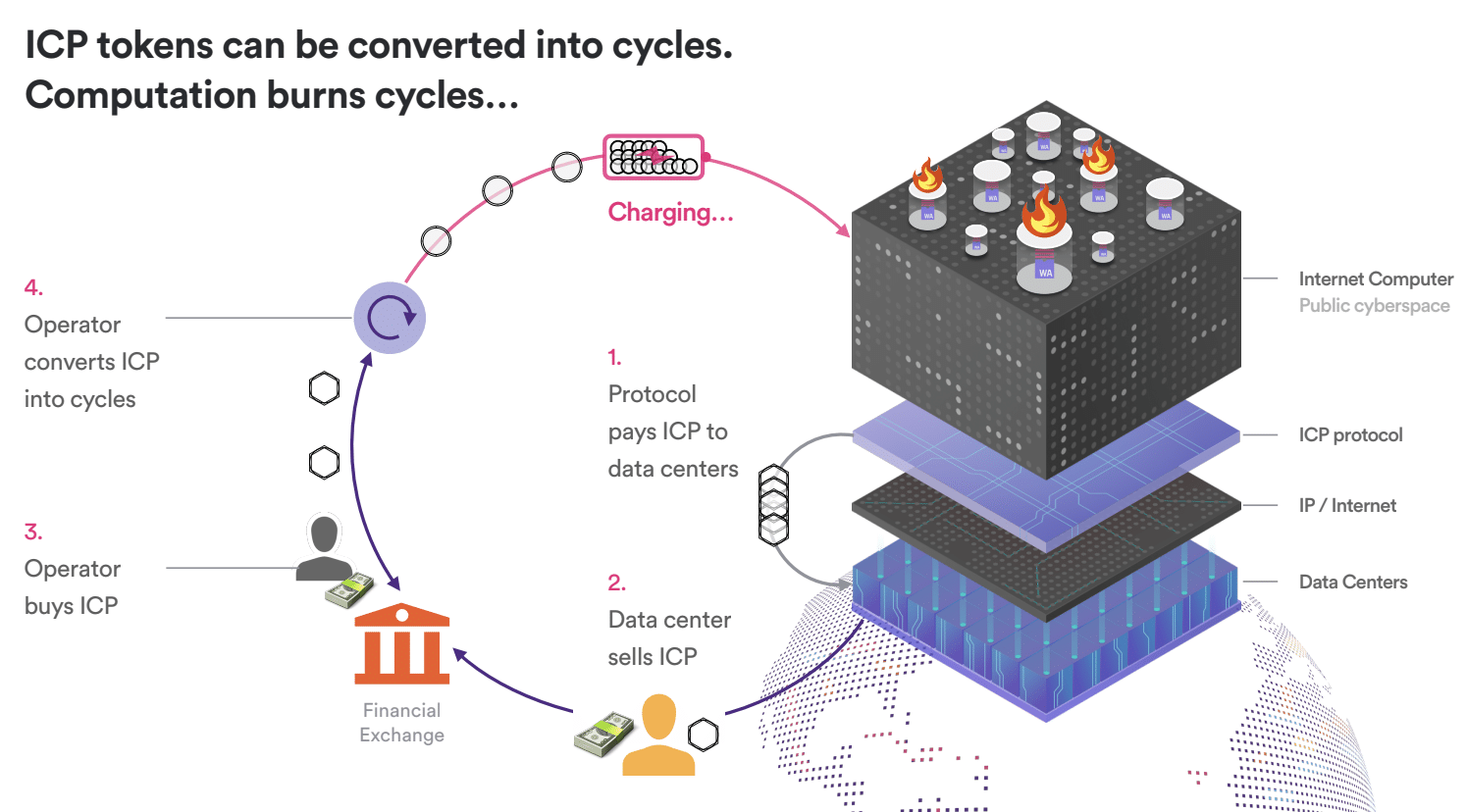
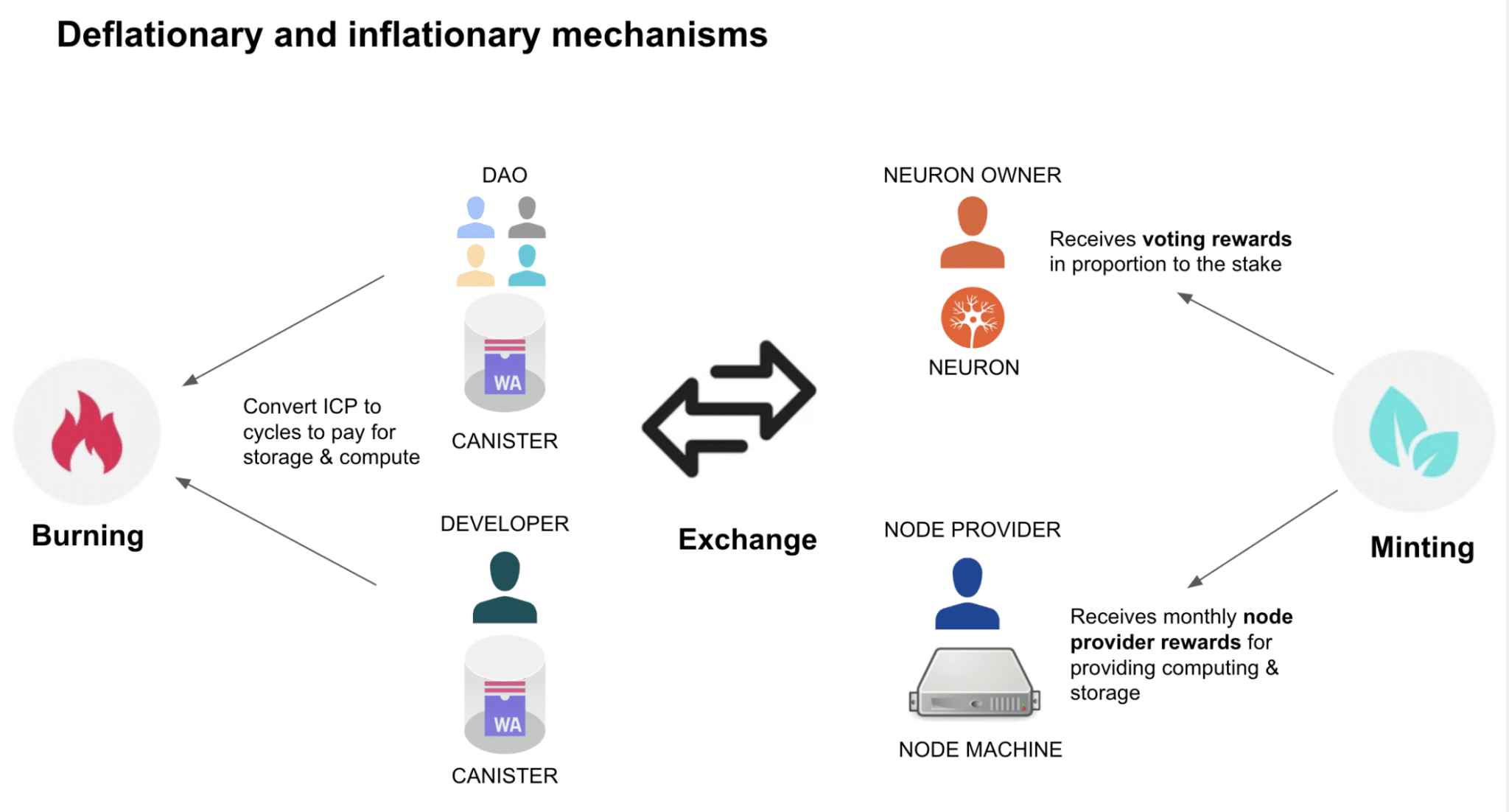
ICP is a public blockchain protocol that creates a “world computer”—a decentralized alternative to centralized cloud infrastructure. Independent data centers (node providers) run the network, governed by the Network Nervous System (NNS), the world’s largest and most active DAO.
Unlike traditional blockchains limited to simple transactions or smart contracts, ICP’s canisters (advanced smart contracts) execute complex code at internet scale. They support WebAssembly (Wasm), host static assets for full websites, handle HTTP requests, and scale horizontally through subnets—groups of nodes that operate as independent blockchain shards.
ICP’s chain-key cryptography enables secure, efficient operations across the network without compromising decentralization. The result: a sovereign cloud where applications are unstoppable, tamperproof, and free from vendor lock-in. You can run them on the public ICP network or deploy private, on-prem sovereign subnets.
Key Features of ICP for Decentralized Cloud Computing
ICP stands out through several innovative features tailored for cloud-like workloads:
- Subnet Architecture and Sovereign Subnets: The network scales by adding subnets. Sovereign subnets allow jurisdictions or organizations to specify node locations (e.g., all within one country), guaranteeing data locality and regulatory compliance while retaining full blockchain security and decentralization.
- Serverless Canister Model: Developers deploy canisters that handle compute, storage, and serving without managing servers, scaling, or DevOps. The network enforces security and resource limits.
- Reverse Gas Model and Cycles: Canisters are pre-charged with “cycles” (computational fuel derived from ICP tokens). Users often interact for free, while the canister covers costs—ideal for consumer-facing apps and mass adoption.
- On-Chain Everything: Host frontends, backends, databases, and even AI models entirely on-chain. No reliance on external APIs or centralized hosting.
- High Performance: Sub-second finality, massive throughput, and low latency rival or exceed traditional clouds for many use cases.
- AI-Native Capabilities: Integration with tools like Caffeine enables “self-writing” apps—developers (or even non-technical users) describe functionality in natural language, and AI generates production-ready code and deploys it on ICP.
- Decentralized Governance and Security: The NNS DAO controls upgrades and parameters without hard forks. Advanced cryptography (including threshold signatures and vetKeys for privacy) ensures resilience against attacks.
These features make ICP a true decentralized cloud platform, not just a Layer 1 for tokens.
Benefits of ICP in the Decentralized Cloud
Adopting ICP for decentralized cloud workloads delivers transformative advantages:
- True Digital Sovereignty: Nations and organizations escape foreign provider dependency. Data stays within borders, computations remain verifiable, and systems resist external interference.
- Unmatched Security and Resilience: Apps are immune to traditional hacks, DDoS attacks, or provider outages. Everything is cryptographically secured and replicated across independent nodes.
- Cost Efficiency: Competitive storage and compute pricing, with no markup from intermediaries. The model eliminates expensive server management and reduces long-term vendor costs.
- Scalability Without Limits: Add subnets as demand grows. Recent upgrades (e.g., increased storage capacity and load balancing) push boundaries further.
- Privacy and User Ownership: Built-in tools for self-sovereign identity and encrypted data empower users. Applications evolve under community or DAO control.
- AI and Innovation Acceleration: The platform supports decentralized AI inference and development, enabling tamper-proof models and autonomous systems that centralized clouds can’t match in trust.
- Interoperability and Ecosystem Growth: Seamless multi-chain capabilities (Bitcoin, Ethereum, Solana integrations) and tools for rapid development lower barriers for builders.
For governments, this means secure national digital services. For enterprises, it means resilient, compliant infrastructure. For developers, it means building the next generation of unstoppable web services.
Real-World Examples: Sovereign Adoption in Action
ICP’s vision is already materializing through national-level implementations.
The Swiss Sovereign Subnet
In early 2026, at World Computer Day in Davos, ICP launched the first national sovereign subnet in Switzerland (with nodes in Switzerland and Liechtenstein). This dedicated infrastructure ensures that data and computation for applications never leave Swiss territory, combining blockchain’s tamper-proof guarantees with Switzerland’s renowned neutrality and data protection standards.
Banks, hospitals, government agencies, and enterprises can now deploy critical systems with verifiable data locality—ideal for finance, healthcare, and regulated industries. It represents a “Swiss bank account” for cloud computing: secure, private, and sovereign. The subnet features independent local node providers and a console for secure orchestration, marking a milestone in European digital independence.
Pakistan’s Sovereign Cloud Partnership
On February 10, 2026, the Pakistan Digital Authority (PDA) signed an MoU with the DFINITY Foundation to build a dedicated Pakistan Subnet on ICP. The goal: advance sovereign AI-native digital infrastructure while keeping sensitive data in-country.
This partnership enables tamper-resistant national-scale applications, AI-powered systems, and modern software independent of foreign clouds. Key elements include:
- A Pakistan-specific subnet for data sovereignty.
- 1,500 Caffeine AI licenses (1,000 for government, 500 for startups and education) to foster local AI development.
- A pilot national messenger app for secure, verifiable communications.
- Plans for DFINITY to establish a local presence in Pakistan.
This move strengthens national resilience, spurs innovation, and allows Pakistan to build and control its digital future on its own terms.
These examples demonstrate ICP’s growing role in enabling nations to reclaim digital sovereignty.

Future Plans: ICP’s Roadmap for Decentralized Cloud Dominance
ICP’s development continues at a rapid pace, with a clear focus on enhancing its cloud capabilities. The official roadmap outlines several themes directly relevant to decentralized cloud computing:
- Compute Platform Enhancements: Initiatives like Fission (load balancing and higher capacity) and Protium (immutable blob storage) will dramatically increase scalability, storage, and performance.
- Decentralized AI (DeAI): Building on the Vertex milestone and Caffeine platform, future work includes advanced on-chain AI inference, model training, and a decentralized AI marketplace. The vision is a “self-writing internet” where AI autonomously builds and maintains sophisticated applications.
- Sovereign and Privacy Features: More national and institutional subnets, expanded privacy tools (e.g., vetKeys), and verifiable credentials to support regulated use cases.
- Storage and Scalability Upgrades: Significant increases in subnet capacity and throughput to handle enterprise and national workloads.
- Multi-Chain and Ecosystem Growth: Deeper integrations (e.g., Dogecoin, expanded Solana support) position ICP as a universal orchestration layer.
- Global Adoption: Expect more sovereign subnet launches, enterprise pilots, and tools that make migration from traditional clouds seamless.
Longer-term, ICP aims to become the default infrastructure for much of the world’s software—secure, sovereign, AI-augmented, and truly decentralized.
Conclusion: The Sovereign Cloud Future is Here
The decentralized cloud is no longer a distant dream; it’s an emerging reality powered by protocols like ICP. By combining blockchain security with web-scale performance, sovereign subnets, and AI-native tools, ICP offers a compelling alternative to centralized giants—one that prioritizes user and national sovereignty, resilience, and innovation.
From Switzerland’s pioneering national subnet to Pakistan’s bold step toward AI-sovereign infrastructure, real-world adoption is accelerating. As ICP’s roadmap delivers even greater scalability, storage, and intelligence, it is well-positioned to redefine how the world computes.
For developers, governments, and enterprises ready to escape vendor lock-in and build the future, now is the time to explore ICP. Stay informed with the latest updates, case studies, and technical insights right here on icpinformer.com.
The network is the cloud—and the cloud is becoming sovereign.
Check out recent real world news with AWS data centers that were attacked and makes the case for ICP.
Leave a Reply